
Bodies and Contested Lands
In this fifth instalment of the #UMNATV Colloquim series here on MEDIA INDIGENA, Masters student Leslie Agger offers this take on Nina Wilson’s March 12 speech to a small audience of mostly University of Manitoba graduate students.
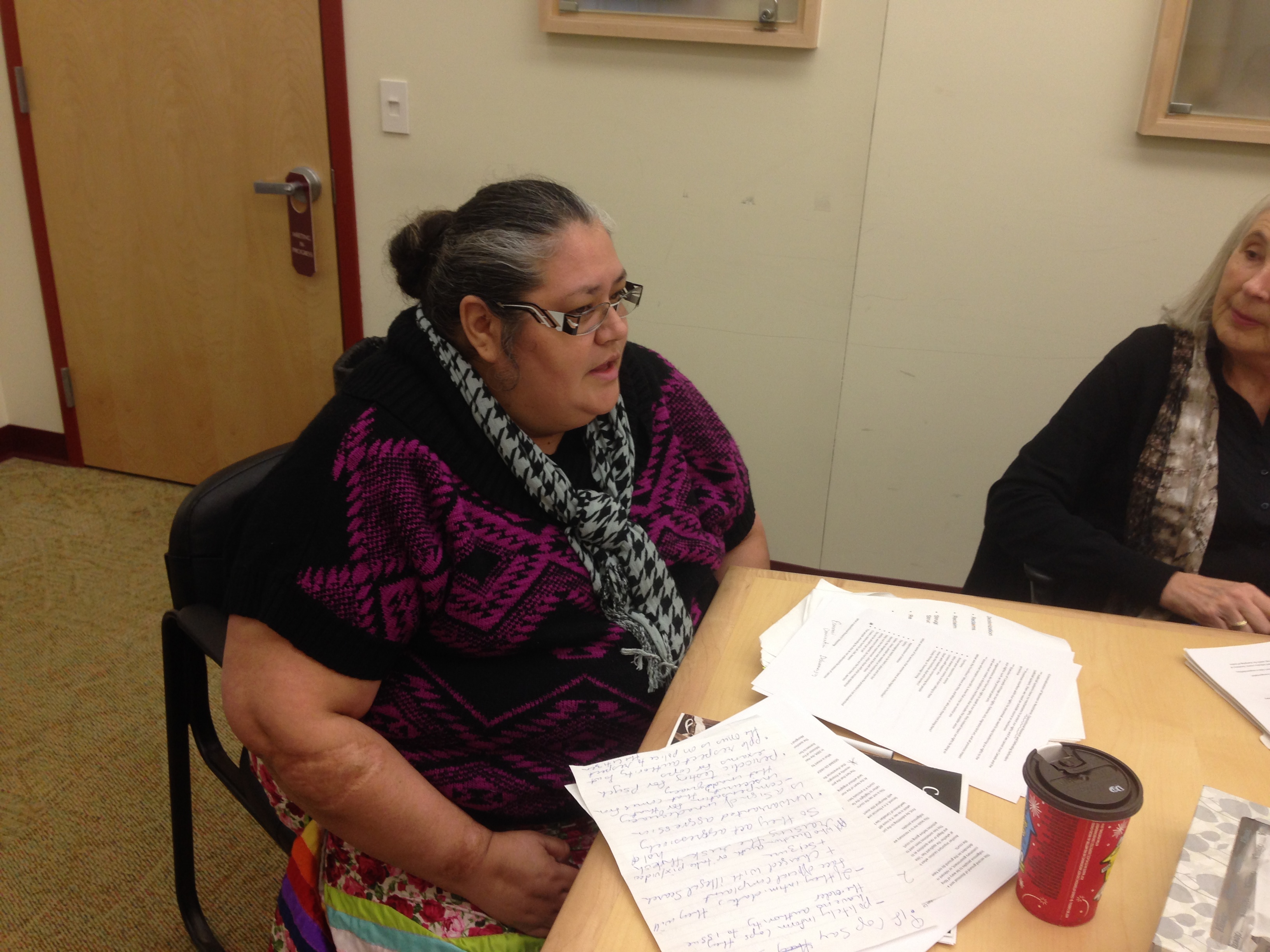
Nina Wilson is a self-described Indigenous activist and mother best known as one of four founding members of the Idle No More (INM) movement. Though INM was originally concerned with the federal government’s Omnibus C-45 bill, the discourse has become expanded to include such fundamentals as Indigenous identity, youth empowerment, and land because, as she explains, corporate exploitation of resources degrades the social cohesiveness of Indigenous people and their communities.
For a variety of reasons, Wilson has focused her efforts on land and Aboriginal rights. The lands about which she is concerned are contested spaces. They are the traditional homelands of Indigenous people but they are also the locations of proposed industrial projects. In this discourse, First Nations and industry typically each claim the right to determine if, how, and what activities occur on them. Wilson, along with her supporters, provides assistance to local Indigenous groups attempting to prevent (or perhaps play a greater role in) resource exploitation. As it were, she provides the additional “bodies” required to occupy contested lands currently slated for development. Wilson is aware that she may put herself and her family at risk to do so.
Wilson’s talk specifically dealt with the criminalization of women in resistance movements. She informs us that women, especially mothers, are at the forefront of efforts to protect Indigenous lands. Often, however, this activity renders them vulnerable to violence, state removal of children, and prosecution with few measures to ensure their protection and well-being other than their own anonymity. According to Wilson, Indigenous people have already “done everything” to change things institutionally.
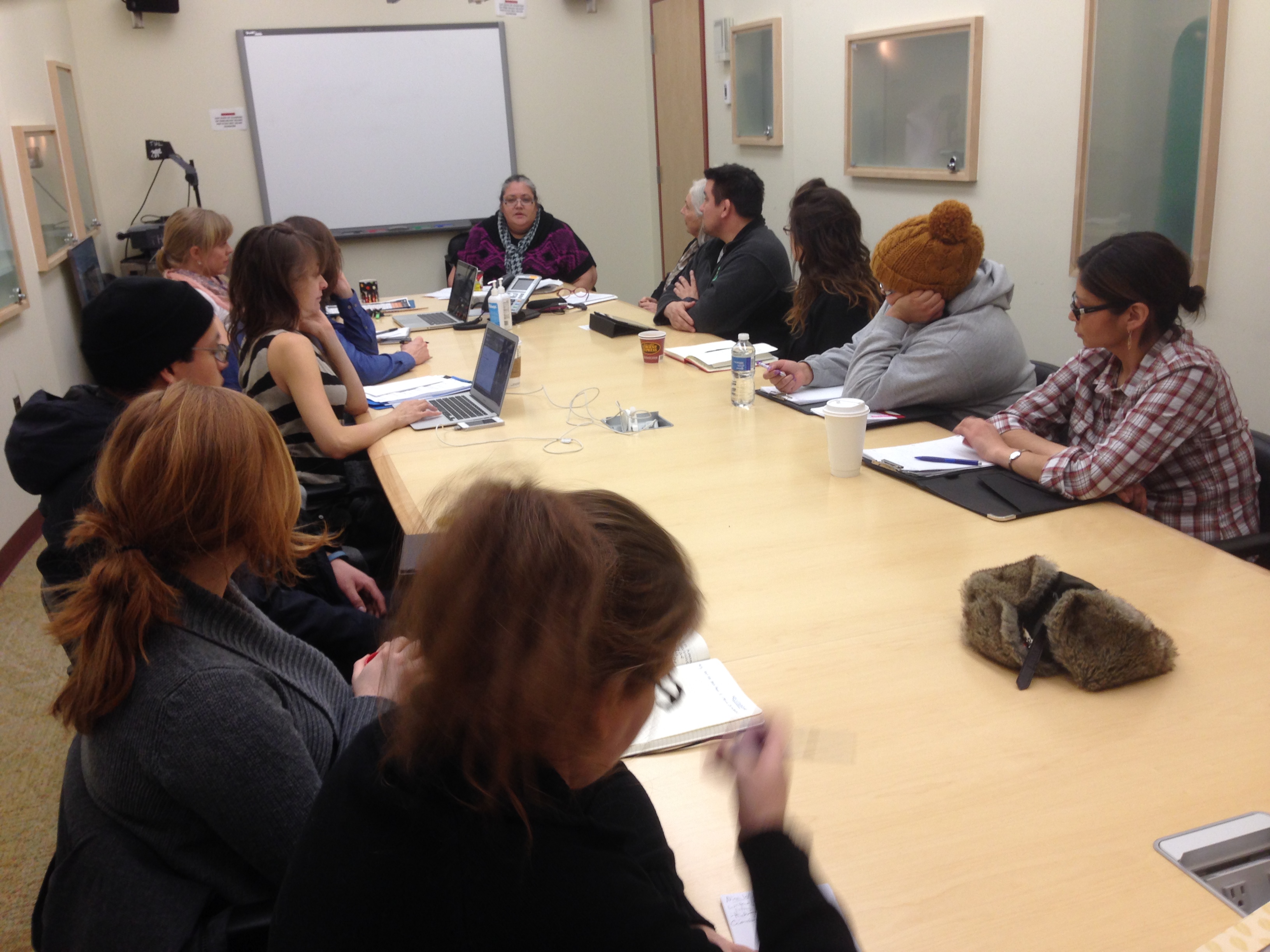
In addition to providing information about efforts to advocate for positive societal change through protest and legislative amendments, Wilson discussed two arguably contentious measures. First, she suggested partnering with groups based on shared interests, but apparently without consideration of ethics. She stated: “There are many people who share our enemies. We will build an alliance with those people regardless of whatever else they do.” Her comment left me pondering the age-old question about the degree to which the end truly justifies the means.
Second, while highlighting the need to link with people and groups who have not been criminalized, Wilson also discussed the possibility of identifying individuals willing to be jailed for a cause. Although this is a personal decision that requires great personal sacrifice, it begs the question of whether this type of conflict is the only means for propelling change. Are negotiations truly a futile exercise?

Great post on Nina Wilson’s presentation, Leslie. I find your questions about the possibility of negotiations interesting. I hope, as it seems you do as well, that negotiations can still be possible and that they could lead to better Indigenous-State relations. However, it does not seem that negotiations will work until there is a paradigm shift in the government approaches towards mutually beneficial relationships. This seems, I would argue, to be what Nina Wilson and the Idle No More movement is working towards. If this works, negotiations could resume and an agreement could be made that benefits both groups. Although this is not a perfect example, the Peace of the Braves in Québec is an example of a government moving towards a better relationship with the Indigenous groups affected by the ‘development’ the government has established. In 1983, Québec decided to take a different approach to State-Indigenous relations with the hope of establishing stronger and better relationships with the Indigenous people in Québec (Wera & Martin 70). From this Québec began more negotiations with the James Bay Cree and the Peace of the Braves was the outcome (Wera & Martin 70). Nation-to-nation agreement like this establish a somewhat better State-Indigenous relationship. I would argue there should be more progressive approaches to State-Indigenous relations, but this is a major step in the right direction. Ultimately, I hope the work of Idle No More and Nina Wilson will convince the federal and provincial governments to take more equally beneficial approaches to relations with Indigenous groups and that Indigenous perspectives will be respected regarding environmental damages caused by development.
Thanks for this wonderful post Leslie,
Joe Dipple
#UMNATV Colloquium Student
Information about the Peace of the Braves from:
Wera, Romuald, and Thibault Martin. “The Way of Modern Treaties: A Review of Hydro Projects and Agreements in Manitoba and Québec.” Power Struggles: Hydro Development and First Nations in Manitoba and Quebec. Ed. Thibault Martin and Steven Hoffman. Winnipeg: University of Manitoba Press, 2008. 55-74. Print.